
Data Modelling on Databricks
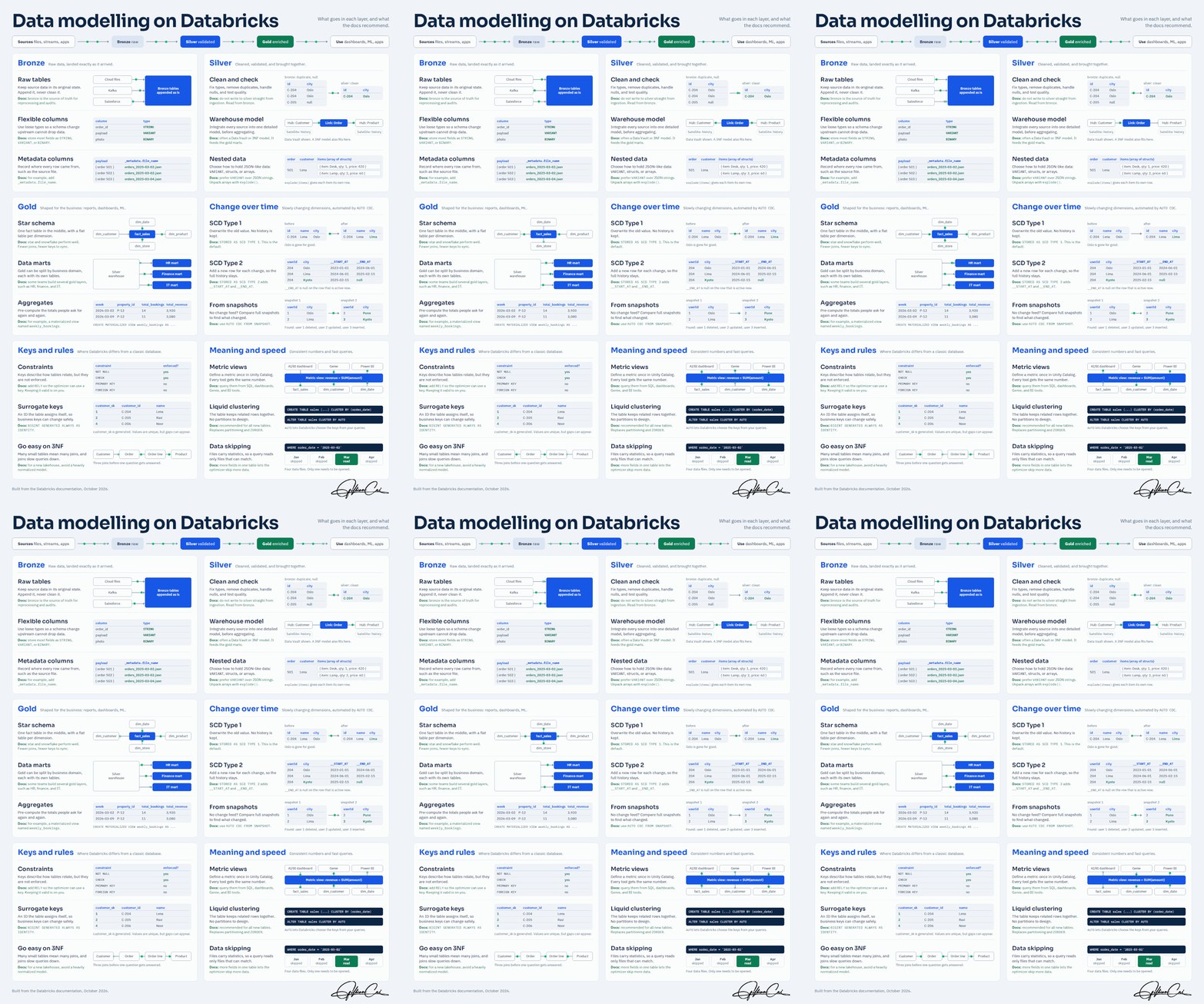
A lakehouse model separates raw ingestion, trusted data and business-ready outputs. The attached visual guide follows this progression through Bronze, Silver and Gold layers, then connects it to history, keys and query performance.
Bronze preserves source records so they can be audited and reprocessed. Keep the original payload and record useful ingestion metadata, such as the source file. Flexible representations can help preserve fields when source schemas change.
Silver cleans and combines data. Typical work includes correcting types, removing duplicates, handling nulls and checking quality. This layer can also integrate source systems into a consistent model before downstream aggregation.
Gold serves business use cases. Star schemas pair fact tables with dimensions, while data marts organise outputs for teams such as finance, HR and IT. Precomputed aggregates can answer repeated reporting questions efficiently.
History needs an explicit design. SCD Type 1 replaces old values; SCD Type 2 adds versions so changes remain available over time. Snapshot comparisons can identify changes when a suitable change feed is unavailable.
The infographic also highlights surrogate keys, constraints, metric views, liquid clustering and data skipping. Treat these as design choices to evaluate against your data, platform capabilities and workload.